Research Theme 04
Clinical Informatics & AI
My work in clinical informatics examines how emerging technologies can
be evaluated, implemented, and governed in ways that improve patient care.
Rather than focusing solely on model performance, I am interested in the
broader questions of clinical utility, human values, and how AI systems
interact with real-world healthcare environments.
Selected publications
This work explores responsible AI evaluation, human-centered design,
and the role of clinician and patient values in healthcare technology.
Perspective
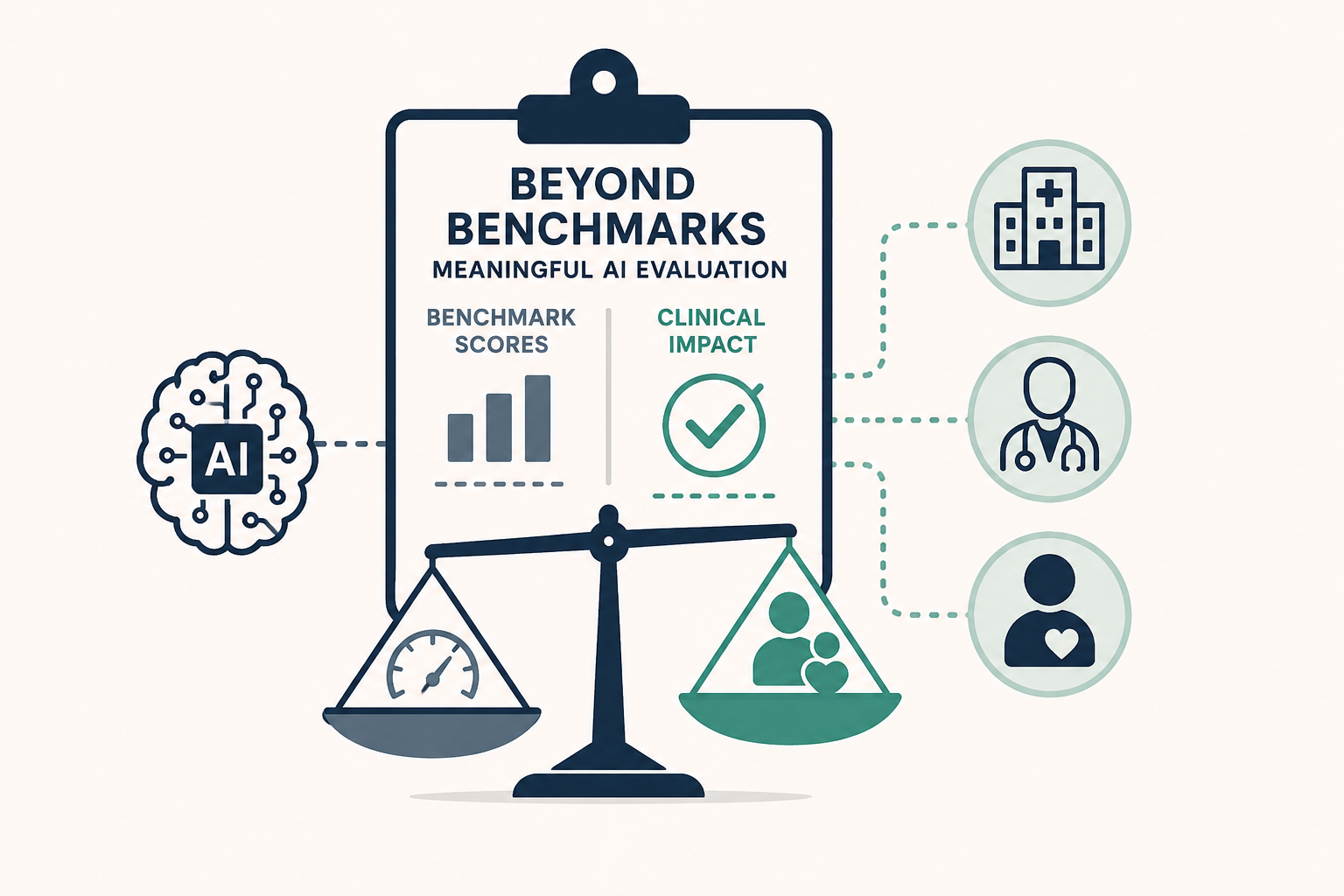
Moving Beyond the Benchmarks:
Five Foundational Principles for Meaningful AI Evaluation in Healthcare
PLOS Digital Health · 2026
This paper argues that healthcare AI should be evaluated according
to its clinical purpose and real-world context, rather than relying
exclusively on static benchmark performance. We propose five
foundational principles for more meaningful and clinically relevant
AI evaluation.
Why this matters
Many healthcare AI systems perform well on benchmarks but fail
to demonstrate meaningful clinical impact. This work provides a
framework for evaluating AI based on whether it improves care,
supports decision-making, and functions reliably in practice.
Preprint
Keeping Experts in the Loop: Expert-Guided Optimization for Clinical Data
Classification using Large Language Models
arXiv · 2024
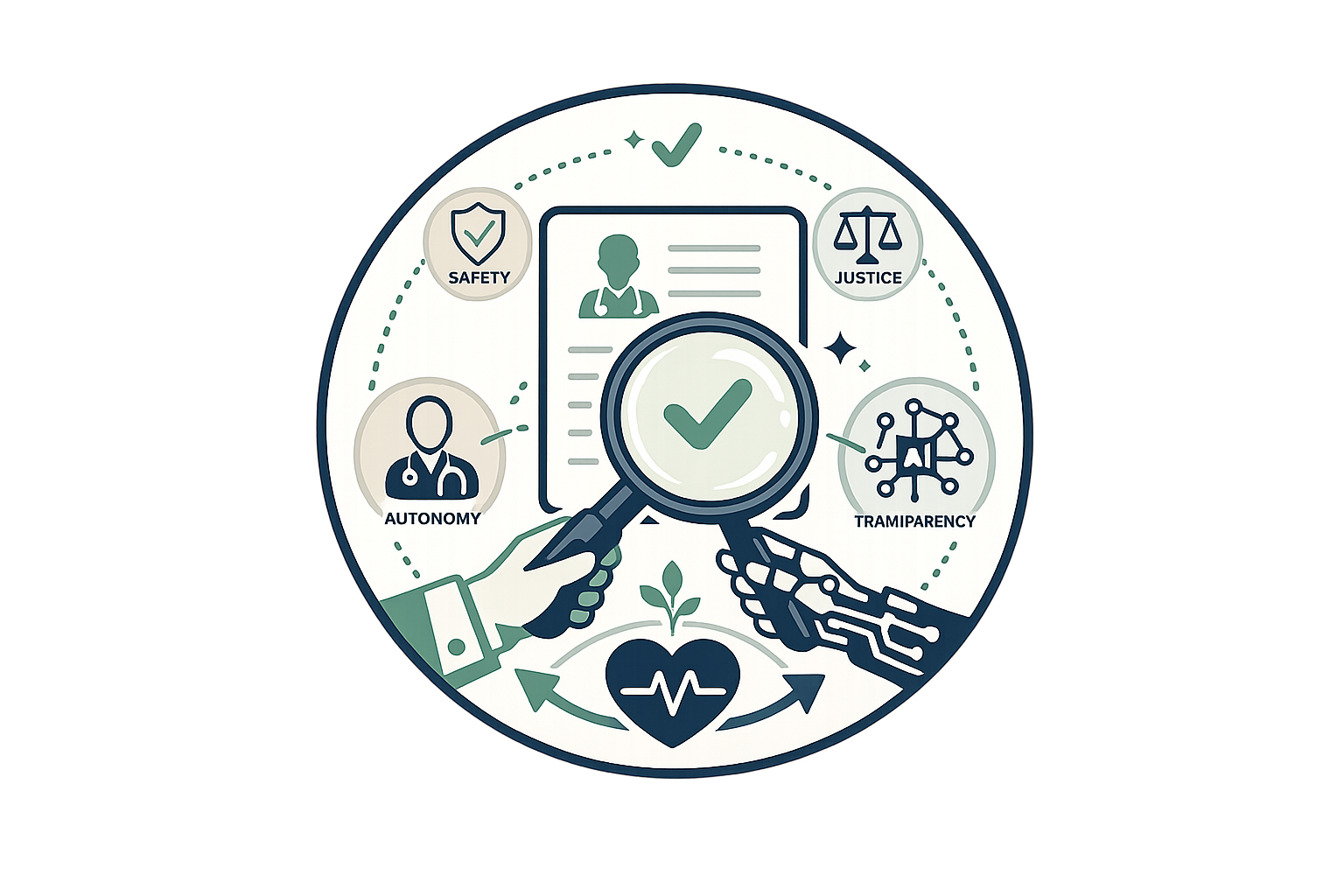
This paper introduces StructEase, a framework designed to
improve how large language models classify unstructured
clinical notes. Rather than relying on fully automated prompt
optimization, StructEase keeps clinical experts actively involved
in the refinement process, using targeted feedback to improve
model performance while minimizing the amount of expert
review required.
Why this matters
Many healthcare AI systems aim to replace human expertise
during model development. This work explores a different
approach: identifying where expert input is most valuable and
incorporating it strategically into the workflow. The findings
suggest that carefully designed human–AI collaboration can
outperform fully automated approaches while requiring only
minimal additional effort from clinicians.