Research
/
Carbamylation & CKD Biomarkers
Research Theme 01
Carbamylation & CKD biomarkers
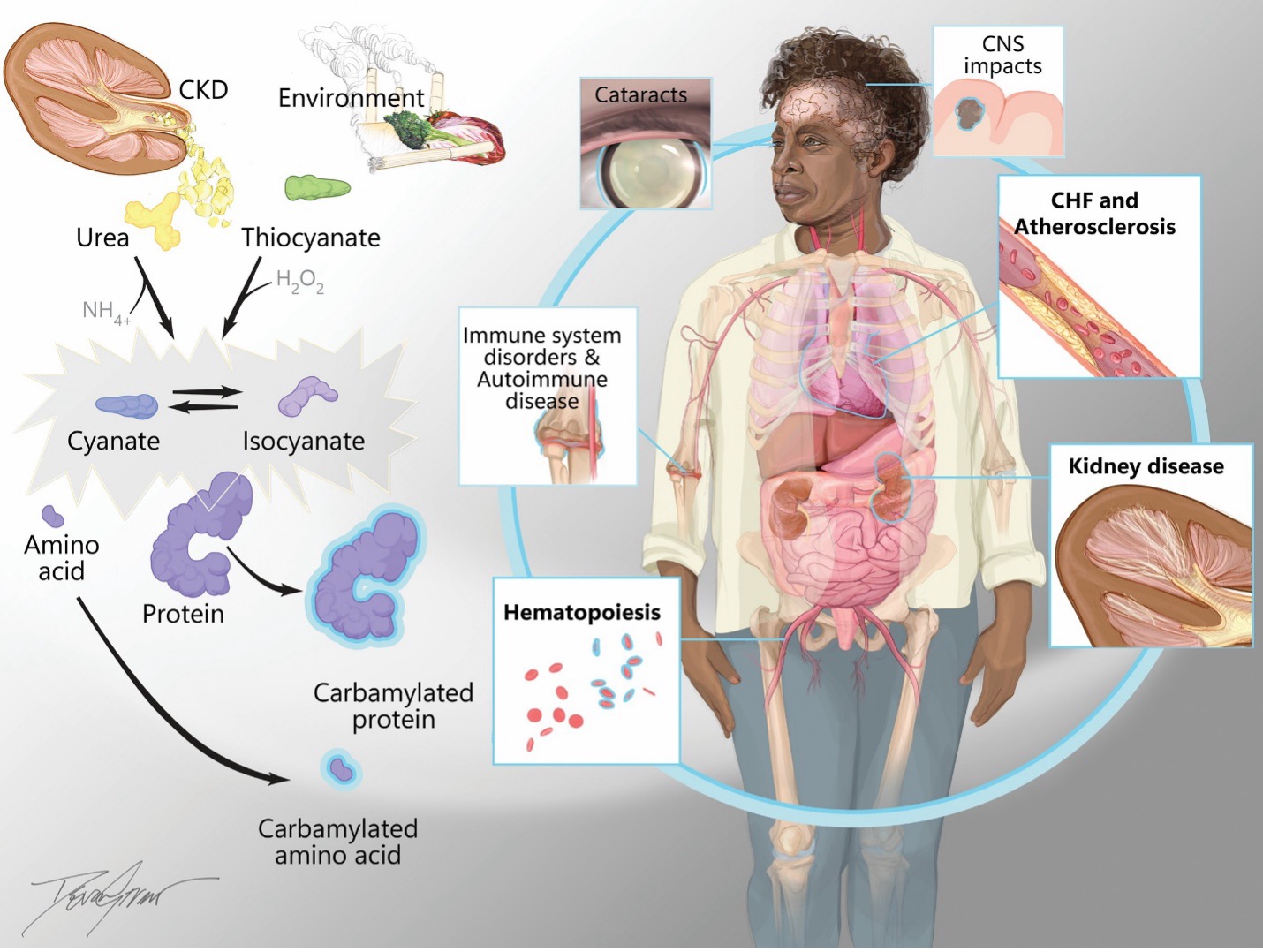
My early research focused on protein carbamylation in chronic kidney disease:
what it is, how it relates to metabolic stress and cardiovascular risk,
and whether carbamylation biomarkers can help identify clinically meaningful
patterns of disease progression and outcomes.
Selected publications
This work spans mechanistic reviews, biomarker evaluation, and
discovery-oriented phenotypic analyses in CKD cohorts.
Review
Translating Carbamylation Biology into Precision Medicine for Kidney Disease
Clinical Journal of the American Society of Nephrology · 2025
A narrative review integrating biochemical, epidemiologic, and translational
evidence on carbamylation in CKD, with a focus on emerging opportunities
for biomarker development and precision-medicine approaches.
Why this matters
This paper frames carbamylation as more than a biochemical byproduct of
kidney dysfunction — positioning it as a potentially actionable pathway
linking CKD biology to clinical risk.
Original Research
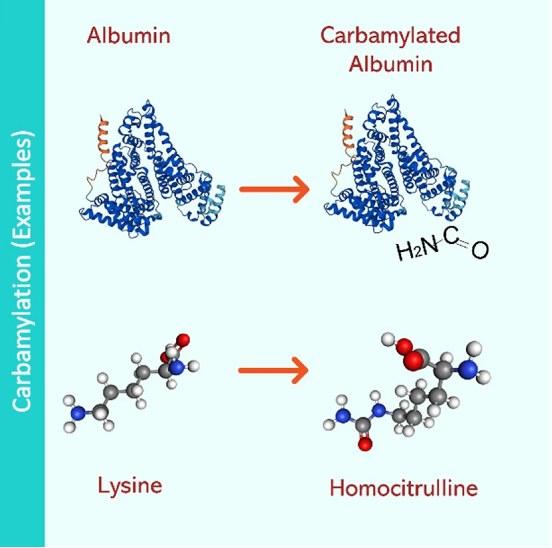
Comparative CKD Risk Prediction Using Homocitrulline and Carbamylated Albumin
BMC Nephrology · 2024
This study compared two circulating markers of protein carbamylation —
homocitrulline and carbamylated albumin — in participants with CKD
stages 2–4 from the CRIC cohort.
Why this matters
By comparing two ways of measuring carbamylation burden, this work helped
clarify whether different biomarkers capture similar or distinct dimensions
of CKD-related risk.
Abstract in a Conference
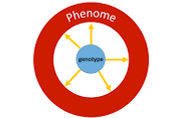
A Phenome-Wide Association Study to Investigate the Role of Carbamylation in CKD
Journal of the American Society of Nephrology · 2024
A phenome-wide analysis examining the broader clinical correlates of
carbamylation in CKD, motivated by the systemic nature of urea-driven
protein modification.
Why this matters
Rather than starting with one outcome, this work used a discovery-oriented
approach to ask where carbamylation signals appear across the clinical
phenotype, helping generate more focused downstream hypotheses.